Deuteronomy 6:8
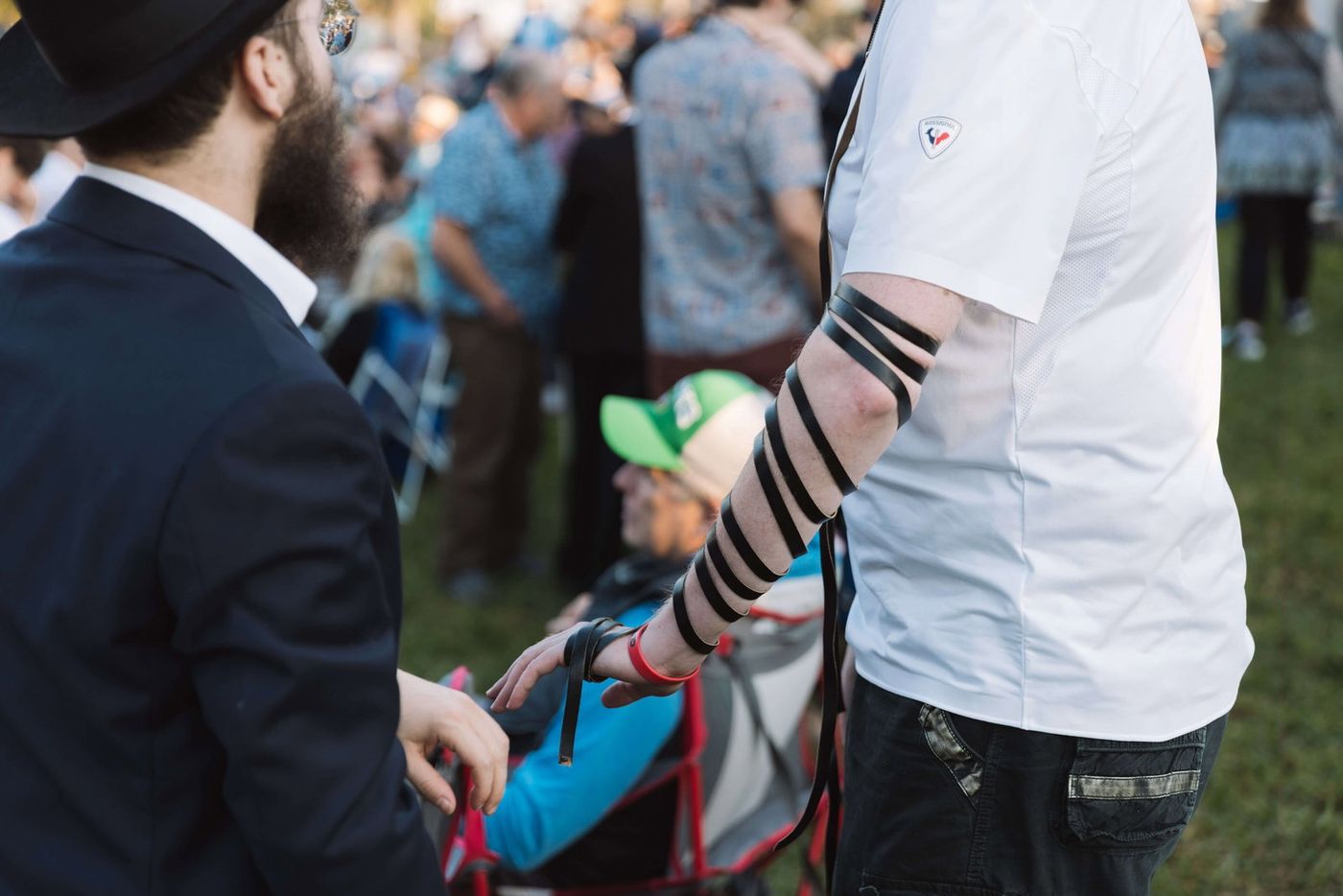
Two small black boxes, hand-written parchment inside, and a pair of leather straps. One goes on the arm, against the heart. One goes on the head, above the eyes. It takes about three minutes, and Jewish men have been doing it exactly this way for three thousand years.
Nothing about a pair of tefillin is decorative. Every part of it is specified — the shape, the colour, the order of the letters, the number of stitches around the base.
letters in each of the tefillin boxes
passages of Torah, sealed inside
wrong letter makes the whole set unfit
A trained scribe writes every letter by hand, with a quill, on parchment from a kosher animal. It is slow, exacting work — which is why a real pair costs what it costs, and why it lasts a lifetime.
The same four texts go into both boxes — in the head, on four separate scrolls in four compartments; in the arm, on a single scroll.
The command to remember the day we left Egypt — and to keep telling our children about it.
The obligation that falls on us because G‑d brought us out with a strong hand.
Hear O Israel — the declaration that G‑d is One, and the line that commands these very boxes.
What follows from listening: rain in its season, a land that gives, a life that holds together.
One box rests against the heart, the seat of the emotions. The other sits above the forehead, over the mind. The straps tie the two together and run down the arm to the hand. Thought, feeling, action — bound to the same purpose for the length of a morning prayer.
This teaches us to dedicate ourselves to the service of G‑d in all that we think, feel and do.
Chabad.org

Any time from sunrise until nightfall. Most people put them on for the morning prayers, but a weekday afternoon is entirely fine — if you have not managed it yet today, there is still time.
Tefillin are not worn on Shabbat or the major holidays — those days are a sign in themselves, and do not need another. Many hold the same for Chol Hamoed.
The arm box goes on the left arm, resting on the bicep so it faces the heart. If you are left-handed, it goes on the right.
The head box sits centred, just above where the hairline is — or was. Not on the forehead, and not back on the crown.
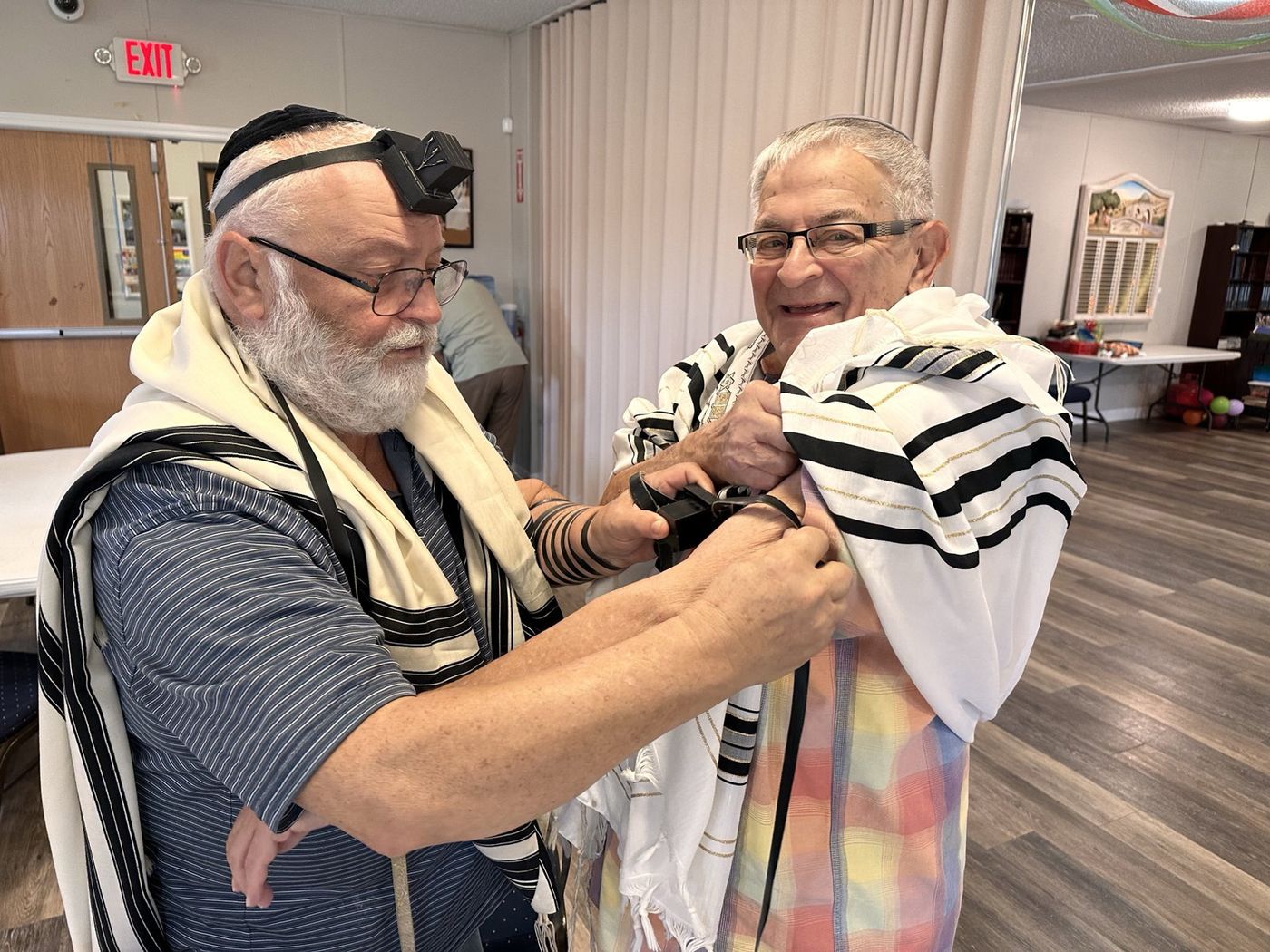
Nobody is born knowing which way the strap winds. Come by any weekday morning and someone will stand next to you and walk you through it — arm first, then the head, one loop at a time. Bring your own pair or use ours. There is no charge and nothing to sign up for.
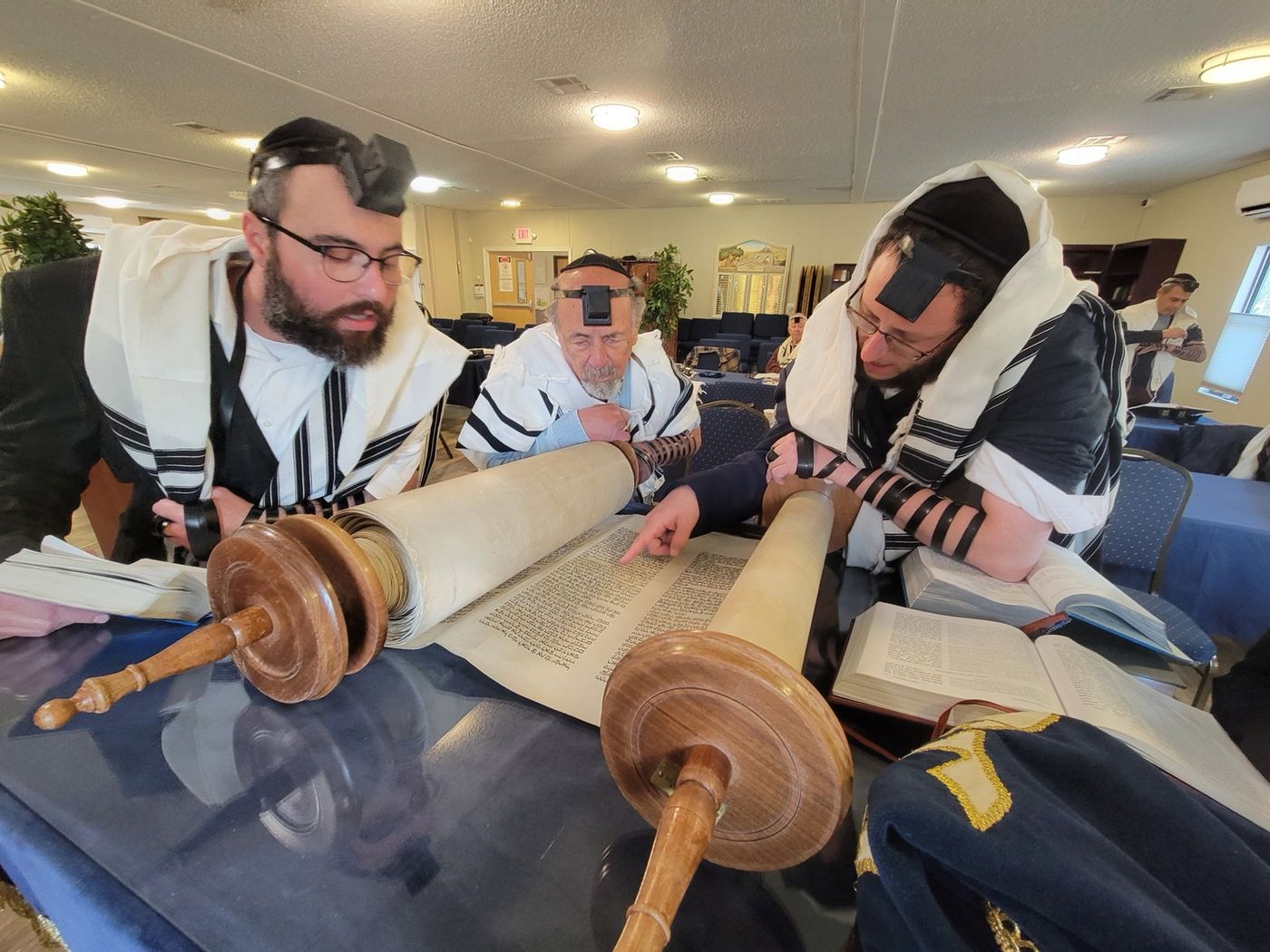
Just before the Six-Day War broke out, the Lubavitcher Rebbe asked that Jewish men and boys everywhere be given the chance to put on tefillin — not as members of anything, not as a commitment to anything else, just once, today. Sixty years later that request is still why a Chabad rabbi will stop you on a street corner and ask if you are Jewish.
“You'll be doing something that your great-great-grandfather did in exactly the same way.”
Borrowed tefillin get you started. Your own pair is what makes it a habit — and what gets handed to a son or a grandson one day. Every set we supply is written by a scribe, checked, and comes ready to wear. Order below and we will have them ready for you at Chabad.
A fully kosher, hand-written set.
The same mitzvah, finer work.
If a pair of tefillin is out of reach right now — for you, for a son coming up to bar mitzvah, for anyone — tell us. We have people in this community who quietly sponsor pairs for exactly this, and the arrangement stays between you and the rabbi.
Straps fray, corners soften, and parchment does not love Florida humidity — especially in a set that has been sitting in a drawer since a bar mitzvah decades ago. Bring yours in and we will have them looked at by a scribe.
