It started with a lesson in Hebrew School. Our CKids students learned about the mezuzah — what’s inside it, where it goes, and why Jewish families have placed them on their doorposts for thousands of years. They learned about the scroll, the shema written by a sofer, and the idea that a mezuzah isn’t just a decoration — it’s a statement about who lives in that home.
Then the kids went home and did what kids do. They asked questions. “Do we have one?” “Why not?” “Can we get one for my room?”
One parent shared, “My son came home and walked straight to the front door to check. When he saw we didn’t have one, he looked at me like I had some explaining to do.”
That’s how it went, family after family. The children didn’t just absorb the lesson — they brought it home. Through our participation in the CKids Mezuzah Bank, over a dozen families received kosher mezuzahs and had them placed on their doors. For some, it was the first mezuzah their home had ever had.
What does it take? A bracha, a small scroll, a nail in the doorframe — and a Jewish child who knows exactly why it’s there. That’s Torah coming home, one doorpost at a time.
What is a mezuzah?
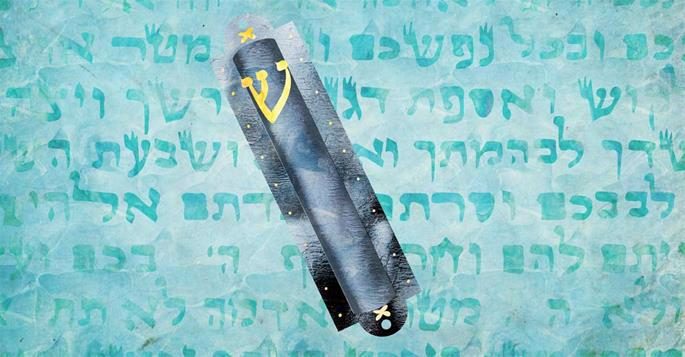
A mezuzah is a small parchment scroll containing two passages from the Torah, including the Shema — the fundamental declaration of Jewish faith. The scroll is handwritten by a specially trained scribe (sofer) and placed inside a protective case on the doorposts of a Jewish home.
The Torah commands us to “write them on the doorposts of your house and on your gates” (Deuteronomy 6:9). The mezuzah is affixed to the right side of the doorframe, tilted inward, and is found on virtually every doorway in a Jewish home — a constant reminder of G‑d’s presence and our connection to Him.
Interested in getting a mezuzah for your home? Contact Chabad of Venice — we’d love to help.