In today’s tumultuous post–October 7th world, worry and anxiety show up uninvited and then refuse to leave. Many of us are carrying a quiet, constant tension: about Israel, about our children and grandchildren, about the Jewish future, about our own inner lives.
There is some comfort in realizing that this struggle is not new. Jews have been writing, asking, and crying out for guidance for generations. That is what makes Letters for Life: Guidance for Emotional Wellness from the Rebbe feel so timely and so timeless at once — and why it was chosen as the current book for the Women’s Book Club, led by Chaya Rivka.
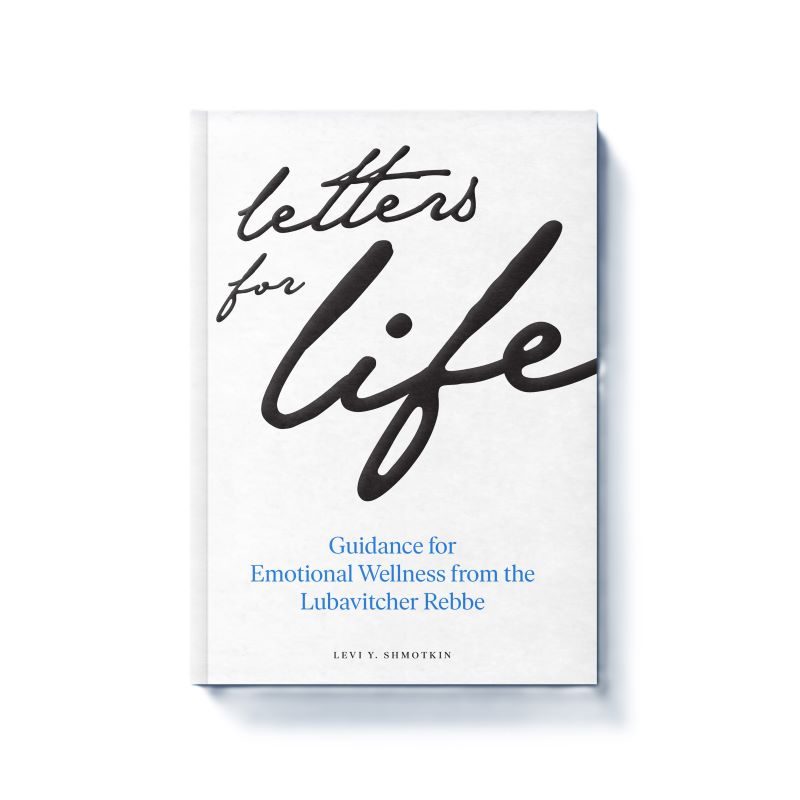
Letters for Life, curated by Levy Y. Shmotkin from some 20,000 published letters.
Over the decades of his leadership, the Rebbe received thousands of handwritten letters from around the world. The writers were not abstract “case studies.” They were regular people with very real lives: parents worried sick about their children, widows who did not know how they would face the next day, young adults confused about identity and purpose, and professionals drowning in pressure and disappointment. The Rebbe answered patiently, one by one, with clear, tailored guidance.
More than forty volumes, containing some 20,000 letters, have been published. From this vast sea of correspondence, Chasidic writer and scholar Levy Y. Shmotkin curated Letters for Life, a book that takes the Rebbe’s teachings on emotional well-being and organizes them around the questions people are actually asking today.
The editor distills key messages and arranges them into themes — anxiety, purpose, self-worth, relationships, setbacks, and more. It is not meant to replace a doctor or therapist. It is meant to give both ordinary readers and professionals access to the Rebbe’s Torah-rooted view of the human soul, like a clear map to help you navigate life’s harder stretches.
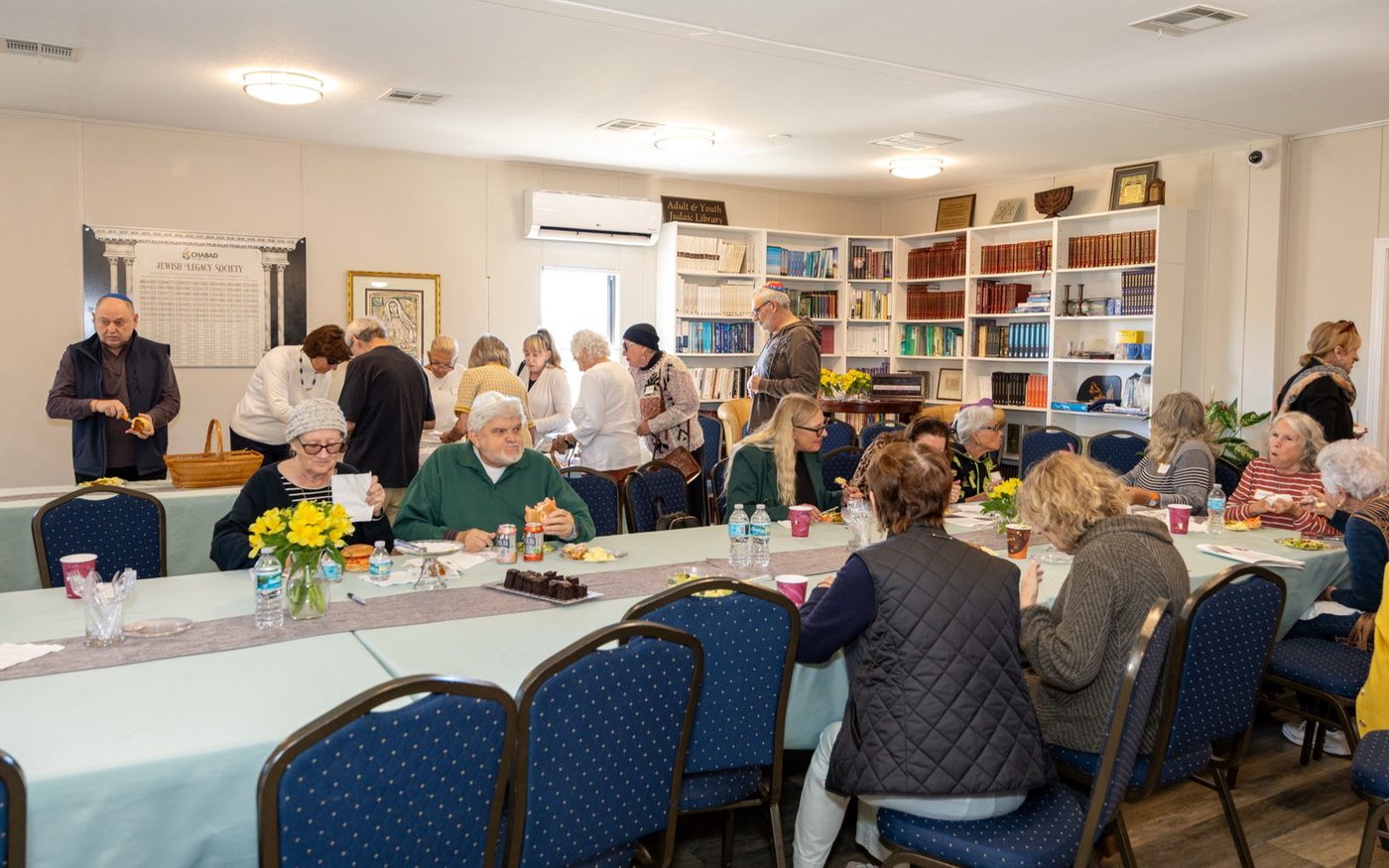
Reading it in the Women’s Book Club setting takes that one step further. Instead of a person sitting alone with a heavy heart and a book, a group of women sit together, read aloud, and talk through what it means in real life — between school drop-off, work, aging parents, and the news.
“I read a line, and I hear the Rebbe telling me, ‘You are needed right here, exactly where you are.’ That alone changes how I walk into my day,” one participant commented after a recent class. Another woman put it more simply: “This is the first book in a long time that makes me want to actually do something differently when I get home.”
A central thread running through many of the letters is empowerment through purpose. Again and again, the Rebbe emphasizes that every person matters, that no one is extra, and that each soul has a specific part of the world that only it can repair. A person’s mood, resilience, and basic stability are often tied to whether they feel truly needed.
Modern research is just beginning to catch up. Dr. Lisa Miller, professor of psychology at Columbia University and author of The Awakened Brain, notes that the Rebbe understood long ago that living with higher purpose and connection to G-d protects and strengthens the mind, insulating against depression, addiction, and other mental health struggles. Only now is neuroscience beginning to put data to what the Rebbe was already teaching.
The book is full of stories that make these ideas concrete.
Marc Wilson, a syndicated columnist and community activist in North Carolina, went through a collapse of both his second marriage and his career. Stuck in a deep emotional pit, he was urged by a friend to seek out the Rebbe. The encounter was brief, but the message was specific: the Rebbe suggested that he begin teaching Talmud, even if it was only to one or two people in his living room. “Sometimes a devoted layperson can do incalculably more good than a rabbi,” the Rebbe said. Wilson did not immediately act, but eventually he followed the advice, and that step slowly pulled him back toward inner strength and dignity. The Rebbe did not give generic “spiritual” talk; he identified a concrete, personal mission and pointed Wilson toward it.
Another oft-told episode involves Rabbi Tzvi Hersh Weinreb. As a young man in Baltimore, in the middle of a painful spiritual crisis, he called the Rebbe’s office anonymously, searching for direction. The Rebbe responded through his secretary: “Tell him there is a Jew in Maryland he can speak to — his name is Weinreb.” When the caller admitted that he himself was Weinreb, the Rebbe answered, “Then he should know that sometimes a person must speak to himself.”
The advice in the letters is usually direct and practical, not wrapped in philosophical language. That is where Letters for Life adds another layer: its extensive endnotes quietly trace each point back to the Rebbe’s broader Torah teachings, showing how the simple, clear guidance is rooted in deep sources in Talmud and Chassidus. It is advice, but never detached from Torah.
There are many books of “good advice.” What makes this one different is that it consists of documented, real-time exchanges between a Rebbe and ordinary people facing actual crises — and that it joins straightforward action steps with a view of the soul that is anything but superficial.
Women in the book club have described how that combination lands for them. “On some pages I underline a sentence because it’s comforting,” one woman said. “On other pages I underline it because it’s a push. It’s both.” Another observed, “We’re not just talking about our feelings. We’re talking about what to do next, and how to look at ourselves differently.”
Letters for Life is not only for someone in acute emotional distress. It speaks to the basic human desire to live a life that is happy, meaningful, and anchored, even while juggling the ordinary ups and downs of work, health, family, and community.
One of the book’s strongest messages is a quiet shift away from the usual “self-help” approach. The Rebbe consistently urges people to stop circling endlessly around themselves and to turn outward — to take responsibility, to help others, to connect to something higher and larger than their own inner weather. Paradoxically, that is where real inner healing begins. The “help” that the “self” most needs is often to stop obsessing about the self and to engage with G-d, with other people, and with actual tasks in the world.
This is exactly the kind of thinking that the Women’s Book Club is wrestling with every week: How do I carry these ideas into my kitchen, my phone calls, my parenting, the way I react to the news? How do I make my life less about “managing my stress” and more about living the mission G-d has actually given me?
If you would like to explore these questions in good company, you are welcome to join. No background is needed, and you do not have to have read every chapter in advance. The setting is warm and down-to-earth, and the goal is not to impress anyone but to grow together.